A store is not responsible for every liquid on its floor. When someone else created the hazard, such as a customer who dropped a grape, Nevada law asks what the store knew about it. Nearly every slip case turns on that answer, and a 1993 Nevada Supreme Court decision shows how constant spills can supply it.
A Spill Case Turns on What the Store Knew
When others caused a hazard, a business is liable only if it had actual or constructive notice of the condition and failed to remedy it. Actual notice means an employee knew about the spill. Constructive notice treats the store as knowing what a reasonable inspection, or its own experience with recurring spills, would have revealed.
The distinction matters because few shoppers can show that an employee watched a spill sit on the floor. For that reason, a Las Vegas slip and fall lawyer looks for proof that the store should have known, and the Nevada Supreme Court has described how that proof can work.
What Happened in Sprague v. Lucky Stores
In Sprague v. Lucky Stores, Inc., 849 P.2d 320 (Nev. 1993), a shopper slipped in the produce section of a supermarket, and a half-smashed grape was found beside him. Nothing showed that the store placed the grape on the floor or knew about that particular grape.
Testimony painted a different picture of the department, however. Customers dropped produce on the floor, an employee found debris 30 to 40 times per shift, and sweeps took place six or seven times an hour. The store manager described produce as a fairly high-risk department for debris on the floor.
The trial court granted summary judgment to the store. The Nevada Supreme Court reversed. It held that a jury could find that the virtually continual debris put the store on constructive notice of the hazard. The court added that a jury could also find the store failed to use reasonable care by not providing skid mats to counter the continuous spillage.
What the Case Points Toward in Evidence
The Sprague reasoning shifts attention from a single spill to the pattern around it. In a Las Vegas store fall, that points toward several kinds of proof:
- Employee testimony about how often spills occur in that area.
- Inspection and sweep logs that show the gaps between checks.
- Surveillance video showing how long the hazard was on the floor.
- Evidence of whether the store used mats or other precautions where spills recur.
The Galliher Law Firm says its attorneys visit the accident site, photograph it, interview witnesses, and preserve evidence before conditions are repaired, and that a former police officer assists with investigation when needed. The firm works on a contingency basis, so no fee is owed unless it recovers money.
Fault and Deadlines Still Apply
Defense arguments can focus on the shopper, such as whether the spill was visible and whether the shopper was watching the floor. Nevada’s comparative fault rules reduce a recovery by the injured person’s share, so those arguments affect value even when the store knew about the hazard.
The filing deadline is short. NRS 11.190(4)(e) generally provides two years for an action to recover damages for injuries to a person caused by the wrongful act or neglect of another.
Resorts and Hotels Follow the Same Logic
Evidence can disappear fastest on large commercial properties, where footage may be overwritten and areas are cleaned or repaired within hours. The same preservation logic applies to casino pool injuries and to a fall in a hotel lobby, where security video, photos, and incident reports are the first things to save.
Knowing who owned or managed the area is the next step. A resort may lease its shops and restaurants to outside operators, and a Las Vegas premises liability lawyer can trace which company owed the duty to keep that stretch of floor safe.
Build the Notice Case Early
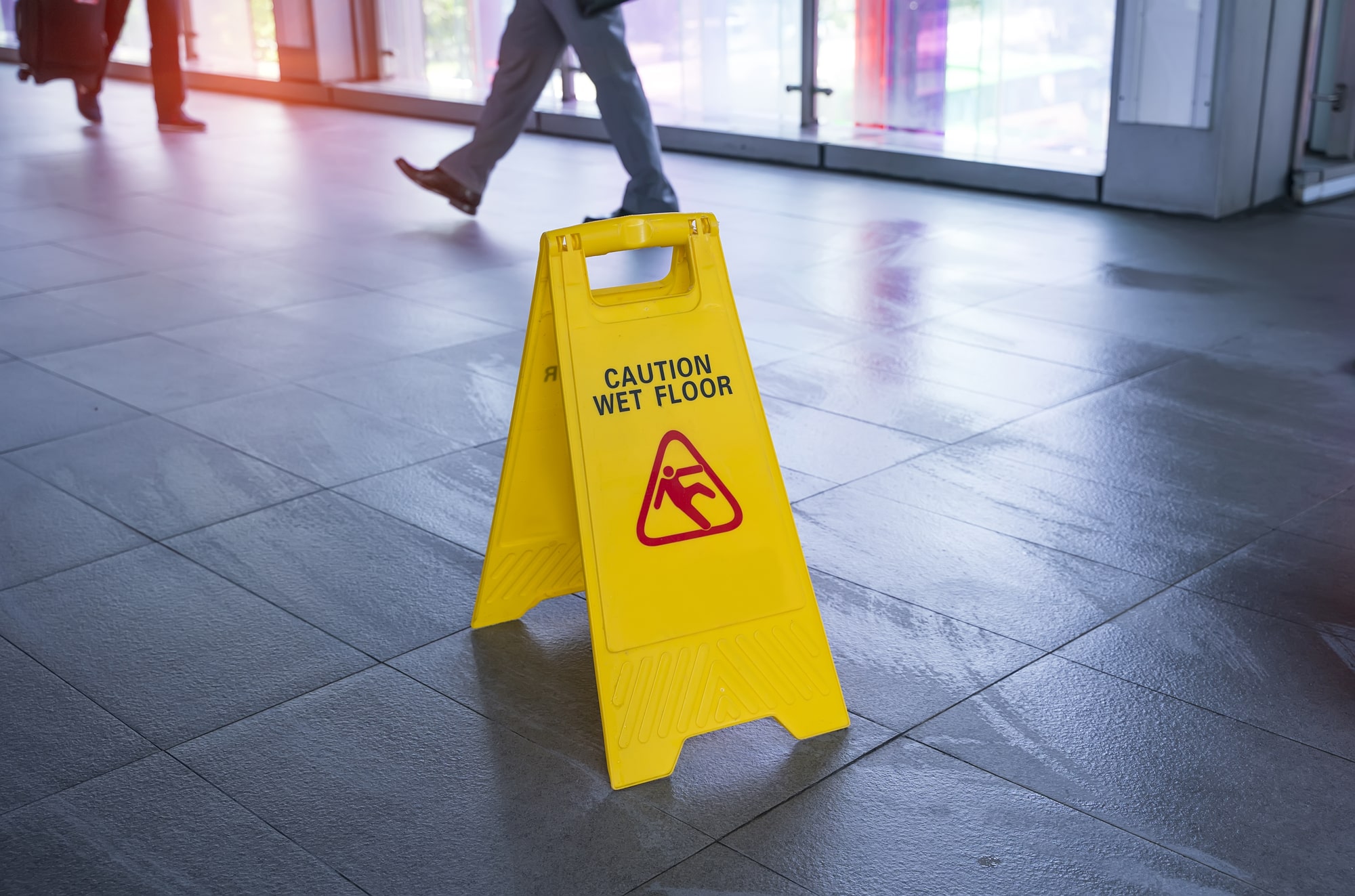
Photographs of the spot, the surrounding floor, and any warning signs, taken before cleanup, give a notice case its starting point. Anyone hurt in a Las Vegas store can reach out to a Las Vegas slip and fall lawyer to discuss how often similar spills occur there and what records the store keeps, since the pattern is what proves notice.