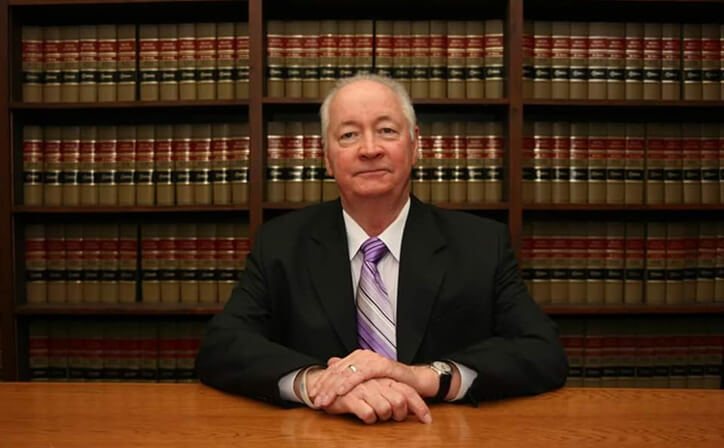
Rideshare crashes raise legal questions that ordinary car accidents don’t. In this video, Keith E. Galliher, Jr., founder and principal attorney of The Galliher Law Firm in Las Vegas, explains why a crash involving an Uber driver deserves a closer look — and why he urges anyone injured in one to come in and talk.
Galliher describes how the Uber app itself can pull a driver’s attention away from the road, from the blinking notification and 15-second acceptance window to the screen the driver must study to locate and evaluate each ride. Using a serious case from his own docket, he shows how that built-in distraction can cause a crash — and how The Galliher Law Firm investigates the way a rideshare company does business to hold the responsible parties accountable.
Transcript
What I’m going to tell everybody out there is: come see me if you’re involved in a crash with an Uber driver. A lot of people don’t realize the way Uber does business. They have an Uber app, and the driver gets the Uber app through his cell phone. The cell phone may be sitting next to him, it may be mounted on his dashboard, it may be in front of his face — but the bottom line is that in order to drive an Uber car, you have to be able to communicate with Uber.
When they have a ride — for example, when someone contacts them and says, “Look, I need transportation” — Uber will contact several of its drivers in that general area. When they contact the driver, there’s a blinking red light on the phone, and the driver has 15 seconds to push a button to say, “I’ll accept the ride.” But once he does that, a screen shows him where the ride is, so he has to look at the screen, determine where the ride is, and determine whether or not he can make it to the ride within a reasonable period of time. If he can’t, then he has to press another button that says, “I can’t make this ride, I can’t take it, so give it to somebody else.” So these drivers are in competition with each other. They want the business, they want the ride, so they’re glued to their cell phones — to the exclusion of having their eyes glued to the roadway.
I have a case right now, a huge case, where an Uber driver ran a red light because he didn’t see it. And the reason he didn’t see it was because he was contacted by Uber about another ride, and his attention was distracted to his cell phone, busily accepting the other ride and determining where it was. Because of that, my client, who was a rear-seated passenger, was seriously injured, as was an SUV that was broadsided by this driver who was distracted as a result of the way that Uber does business.